

A Simple Introduction to One of Manufacturing’s Most Reliable Forming Processes
When you hold a durable plastic part — like an automotive panel, ground protection mat, 5G enclosure, or industrial pallet — there’s a good chance it was made through compression molding.
Compression molding is one of the oldest and most trusted plastics manufacturing methods, known for its ability to produce strong, dimensionally stable, and cost-efficient components from a wide range of materials, including recycled thermoplastics, virgin thermoplastics, engineered materials including ABS and reinforced glass.
In this post, we’ll walk through how compression molding works, where it’s used, and why it remains a smart choice for manufacturers today.
What is Compression Molding?
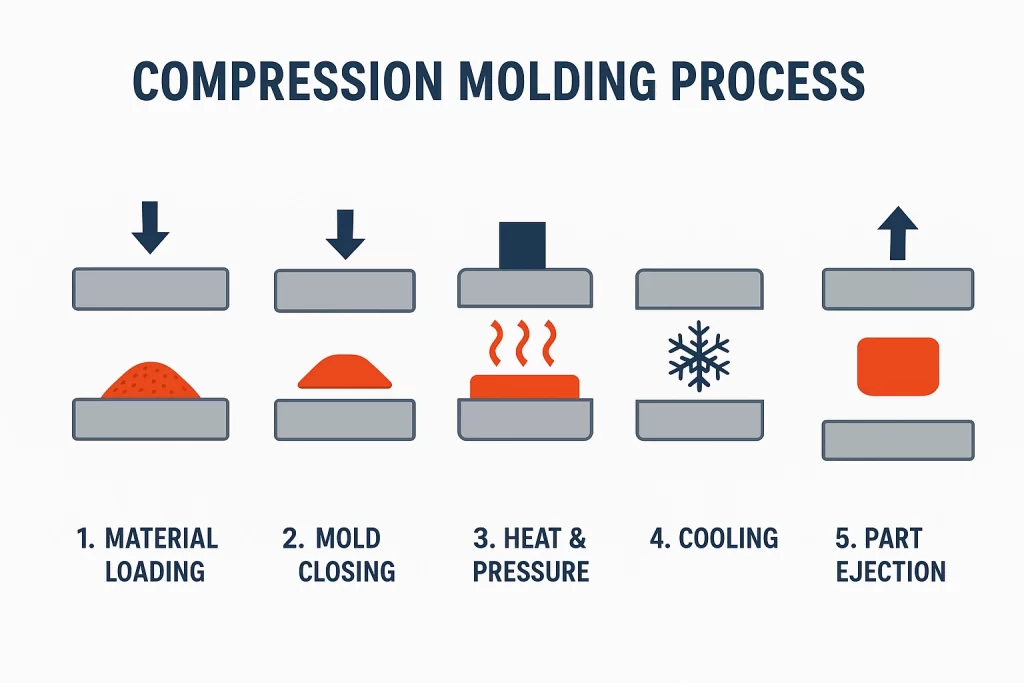
Compression molding is a process in which a measured amount of plastic material — often preheated — is placed into a heated mold cavity. The mold closes, applying heat and pressure until the material fills the shape and cures into a solid form.
Think of it as shaping with strength — the combination of pressure and heat gives the molded part high structural integrity, consistent quality, and minimal waste.
Compression Molding Steps
- Material Preparation
The material (thermoplastics [engineered, virgin or recycled]) is measured and often preheated for better flow and curing. - Loading the Mold
The preform or charge is placed directly into the open, heated mold cavity. - Compression and Curing
The mold closes, compressing the material under controlled pressure and temperature. The material flows to fill the mold shape and cures into its final form. - Cooling and Ejection
Once the material has solidified, the mold opens, and the finished part is removed — often with minimal finishing required.
What Materials Are Used?
Recycled Thermoplastics
Virgin Thermoplastics with Color
Engineered Materials (ABS or Glass)
SMC (Sheet Molding Compound) and BMC (Bulk Molding Compound)
This versatility makes compression molding a top choice for both performance and sustainability.
Where Compression Molding Is Used
Automotive
Body panels, underhood components, battery covers.
Industrial
Housings, machine guards, structural panels.
Electrical
Insulators, switchgear, circuit covers.
Transportation
Pallets, seating components, cargo structures.
Construction
Ground protection mats, outrigger pads, support panels, modular flooring.
Waste Management
Slider doors, lift doors, waste receptacles.
Telecommunications
Underground enclosures.
Sporting Goods
Golf putting panels, sleds, wagons, backboards, etc.
These parts need strength, dimensional stability, and durability — all of which compression molding delivers reliably.
Why Choose Compression Molding?
1. Strength & Structural Integrity
Parts produced by compression molding are dense and uniform, making them ideal for high-load or high-heat environments.
2. Design Flexibility
Complex geometries, textured surfaces, and integrated inserts can all be achieved with the right tooling.
3. Cost Efficiency
Lower tooling and setup costs make compression molding attractive for medium-to-high-volume production.
4. Sustainability
CTC Plastics and other innovators in this space often use recycled and reclaimed plastics, reducing waste and carbon impact.
Why It Matters Today
As industries look to balance performance, sustainability, and cost, compression molding offers a proven path forward. It’s adaptable for new materials, scalable for growing production needs, and ideal for integrating recycled content into durable, long-lasting products.
At CTC Plastics, our expertise in custom compression molding helps customers design and produce parts that meet demanding performance and environmental standards — from concept to final molded product.
Ready to Learn More?
If you’re exploring options for durable, sustainable molded components, our engineering team can help determine whether compression molding is the right fit for your design and production goals. Contact CTC Plastics to start your project or learn more about our compression molding capabilities.
Get A Quote